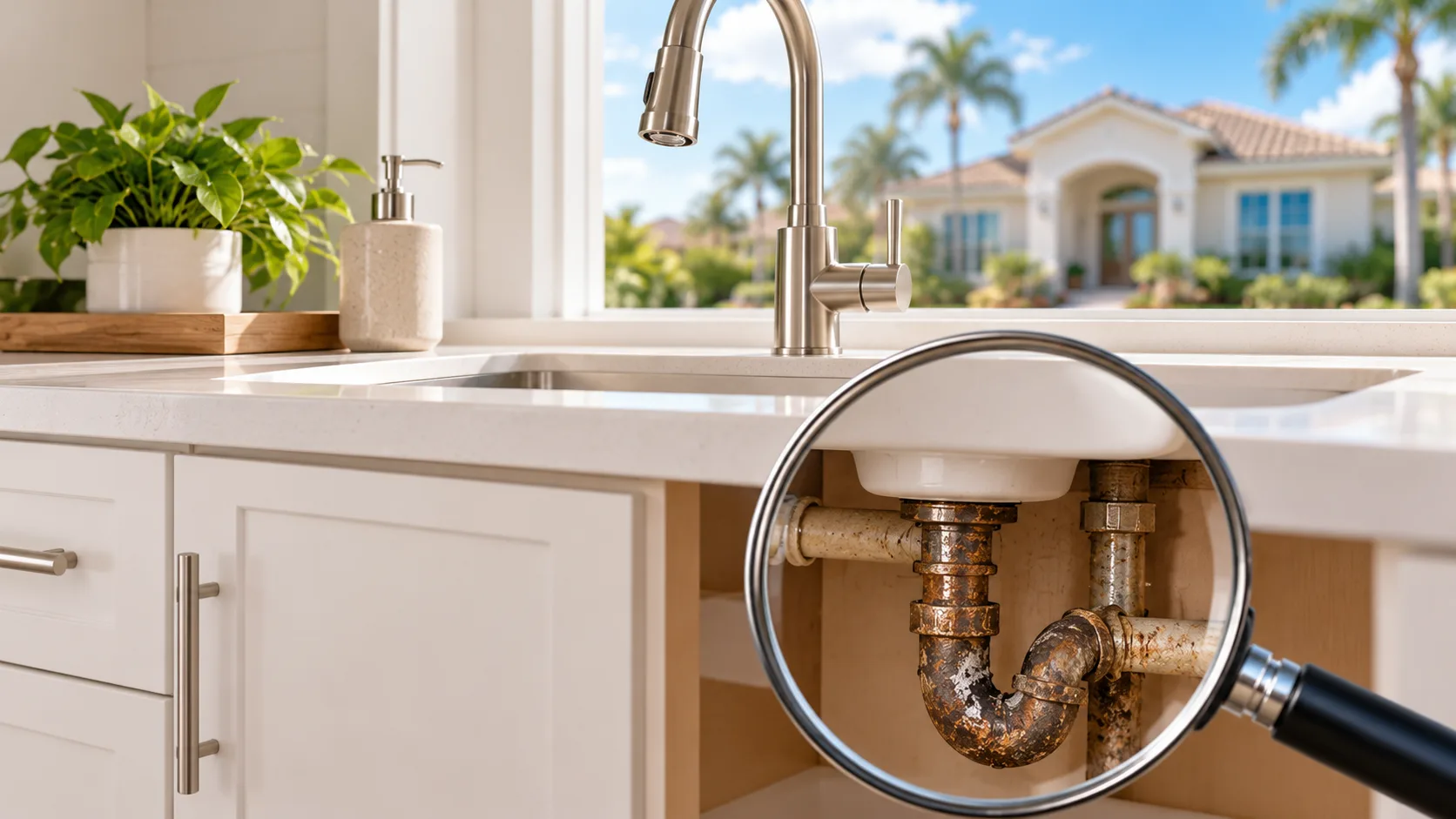
A newly renovated kitchen or bathroom gives a homeowner plenty to feel good about. When an insurance agent asks about plumbing updates, it’s understandable that the renovation comes to mind. There may be new fixtures, a new water heater, and a sizeable contractor’s invoice.
What takes a little more conversation is establishing how much of the plumbing was actually replaced. An owner may have paid for substantial improvements while much of the original piping remains in service.
“Plumbing updated” can describe anything from a fixture replacement to a full repipe, so uncovering the details is important when the property reaches underwriting.
What counts as a plumbing update for underwriting?
The answer depends on what was changed and what the carrier is asking the agent to document. Replacing a water heater is an update to that equipment. It does not establish that the home’s supply or drain piping was replaced.
A few common descriptions illustrate where clarification helps:
| What the client says | What still needs to be established |
|---|---|
| “We remodeled both bathrooms.” | Were fixtures replaced, or was piping replaced too? How far did the work extend? |
| “The house was repiped.” | Did the project cover supply piping, drain piping, or both? Was any original piping left in service? |
| “The plumbing was fixed last year.” | Was this a localized repair or a larger replacement project? |
| “Everything is new.” | Which components does the invoice or inspection identify, and when was each installed? |
A contractor’s detailed scope of work can resolve these questions more reliably than the description on the real estate listing.
Why do supply lines and drain lines need separate attention?
Supply piping brings water to fixtures and appliances; drain piping carries wastewater away. Work on one system does not establish the age or condition of the other.
For example, a home could have newly installed supply lines while its original drain piping remains in place. Describing all of its plumbing as new would leave out a material part of the property’s condition.
This distinction appears explicitly in Citizens’ March 2025 inspection-form update, which called for separate information about supply piping, drain piping, and the water heater, along with details about complete and partial repiping. Those are Citizens’ requirements, but they illustrate why a single “year updated” can leave questions unanswered.
A single update field can be awkward when work was completed in stages. Supporting notes can distinguish the newer piping from what remains original, subject to the carrier’s reporting requirements.
Does the type of pipe determine whether a home is eligible?
Pipe material is one part of the review. The carrier’s current guidelines, the extent of any replacement, and the reported condition also need to be considered.
A report may identify several materials in the same home, such as copper or PEX supply lines and cast-iron drains. The location and extent of that material matter, particularly when some piping has already been replaced.
A plumbing configuration accepted by one carrier may receive a different response from another. Reviewing the inspection and scope of work with underwriting can help clarify whether any additional replacement is needed.
Does a satisfactory 4-point inspection mean the plumbing is acceptable?
A satisfactory inspection provides information for underwriting; it does not guarantee acceptance by every carrier. Our article on common Florida underwriting questions addresses this distinction.
There are limits to what the report establishes, too. Citizens’ sample 4-point form states that the inspection is not a warranty of a system’s fitness or longevity. Its plumbing section records pipe materials, active and prior leaks, and the condition of visible fixtures and connections.
A report showing no active leak does not, by itself, establish that all piping was replaced.
What documentation helps establish the work completed?
Useful records identify the property, completion date, contractor, and scope of the job. Depending on the work and the carrier’s requirements, the file may include:
- A completed-work invoice describing which piping or equipment was replaced.
- Permit and final-inspection records, where applicable.
- An updated inspection report documenting the current condition.
- Photos showing accessible work and any corrected deficiencies.
An estimate describes proposed work. If the file contains only an estimate, completion still needs to be established.
Photos can support the paperwork, but a picture of new piping under one sink cannot establish a whole-house repipe. Our article on property photos in underwriting explains how to make those images useful to the reviewer.
What if the invoice and inspection report disagree?
An apparent disagreement may come down to how the contractor and inspector described the work. Suppose the invoice says “whole-house repipe,” but the inspection lists original cast-iron drains. Both documents could be accurate if the contractor replaced only the supply piping. A more specific description of the project may resolve the issue.
An inspection completed before the project may need to be supplemented with evidence the carrier accepts. An error in the report would need correction by the inspector.
Should a client complete plumbing work before applying?
When a homeowner is considering plumbing work to qualify for coverage, an underwriting review of the proposed scope can help establish whether the project will address the carrier’s concern. That is especially useful when the recommendation involves replacing only part of the system.
An active leak or another urgent condition still needs prompt professional attention.
Already working with Jerger? Contact us with questions about plumbing documentation or the requirements for a property you’re quoting or renewing.
Interested in becoming a Jerger-appointed agent? Apply for an appointment to offer Jerger’s Florida property insurance programs through your agency.
About Jerger MGA
Established in 2005 with an insurance legacy dating back to 1946, Jerger MGA specializes in residential property insurance and is the exclusive managing general agency for American Traditions Insurance Company. Our business began with manufactured home insurance and expanded to include homeowners, dwelling fire, condo, and renters coverage. We work with independent agents, bringing decades of property insurance experience to risk evaluation and helping them navigate underwriting requirements for the homes their clients need to protect.
This article provides general information for insurance professionals. Eligibility and documentation requirements vary by carrier and program. Confirm current guidelines for the property being submitted.
