The quick version: A strong Florida property submission answers the underwriter’s most common questions before they have to ask. That means providing complete roof and occupancy information, understanding the 4-point inspection, documenting loss history, completing the Replacement Cost Estimator, disclosing dogs and unusual liability hazards, checking the wind mitigation form, and understanding whether Citizens is the appropriate market. A complete file means fewer follow-up questions and a faster underwriting decision.
Every submission does one of two things when it reaches an underwriter: it answers the questions, or it creates them. That’s the line between a risk that binds today and one that sits in a queue while requests go back and forth.
The most common Florida property insurance underwriting questions are:
- What type of roof does the risk have?
- What is the occupancy of the property?
- Will the property pass a 4-point inspection?
- What is the property’s loss history?
- Has the Replacement Cost Estimator (RCE) been completed?
- Does the property have an ineligible dog breed?
- Are there any unusual liability hazards on the property?
- Is the Wind Mitigation Form current?
- Is the risk Citizens-eligible, and should it be?
1. What type of roof does the risk have?
Agents should be prepared to provide the roof material, age, shape, and overall condition. These details can significantly affect eligibility, available coverage, and underwriting review.
A roof that is older, has certain materials or shapes, or shows signs of deterioration may require additional documentation or may not meet underwriting guidelines.
2. What is the occupancy of the property?
Clearly identify how the home is being used and occupied. Is it owner-occupied, tenant-occupied, seasonal, secondary, vacant, or otherwise unoccupied?
Occupancy is an important underwriting consideration because the way a property is used can affect both eligibility and coverage.
3. Will the property pass a 4-point inspection?
A 4-point inspection can help identify the condition of the property’s roof, electrical, plumbing, and HVAC systems.
Agents should understand that completing a 4-point inspection does not automatically mean a property is eligible for coverage. The systems must meet the applicable underwriting requirements, and additional documentation may be needed depending on the property’s characteristics.
4. What is the property’s loss history?
Loss history provides important insight into the property’s prior claims activity. Agents should obtain accurate information about prior losses, dates, causes of loss, and repairs completed.
Multiple or recent losses may affect eligibility, so accurate disclosure is essential.
5. Has the Replacement Cost Estimator (RCE) been completed?
A completed replacement cost estimate helps ensure the home is insured for an appropriate amount based on its construction characteristics.
Agents should make sure the RCE is complete and accurate, including relevant details such as square footage, construction type, features, and upgrades.
6. Does the property have an ineligible dog breed?
Agents should ask about dogs and other potentially restricted animals as part of the application process.
If the carrier has breed-specific eligibility requirements, the agent should verify the breed against the current underwriting guidelines rather than assuming the risk is acceptable.
7. Are there any unusual liability hazards on the property?
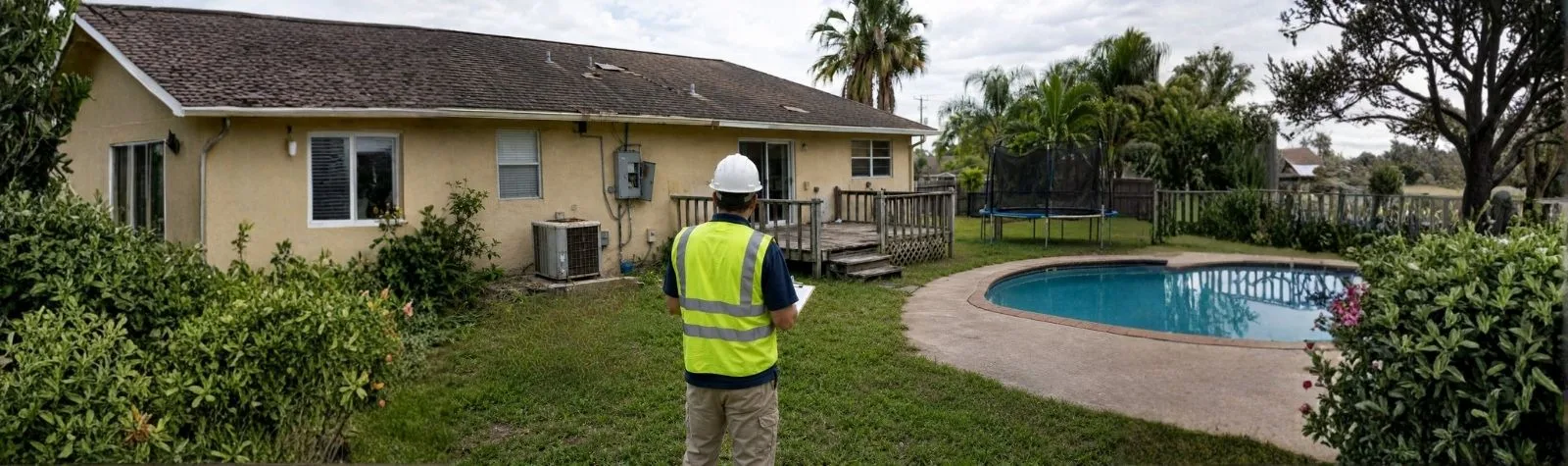
Agents should look beyond the dwelling itself and identify anything on the property that could create an unusual liability exposure. Examples may include:
- Swimming pools, especially those without appropriate safety features
- Trampolines
- Docks, boat lifts, or waterfront access
- ATVs, golf carts, or other recreational vehicles
- Horses or other livestock
- Certain business activities conducted from the home
- Short-term rentals or frequent guest occupancy
- Large play structures or recreational equipment
- Ponds or other bodies of water
- Unfenced or otherwise hazardous areas
- Any other condition that could increase the likelihood or severity of a liability claim
Agent tip: When in doubt, disclose the exposure and let the carrier determine eligibility. An unusual liability hazard that isn’t identified upfront can create underwriting issues later.
8. Is the Wind Mitigation Form current?
Florida’s Uniform Mitigation Verification Inspection Form (OIR-B1-1802) was updated effective April 1, 2026. The new version is OIR-B1-1802 (Rev. 04/26), and inspections conducted on or after April 1, 2026, must use the revised form.
Agents should pay close attention to the revision date when reviewing a wind mitigation form. The form documents qualifying wind-resistant features that may affect the policyholder’s wind mitigation premium credits.
A prior Rev. 01/12 form may still be usable in certain circumstances if it was completed within five years and there have been no material changes to the structure, but agents should verify the carrier’s requirements before relying on an older form.
9. Is the risk Citizens-eligible, and should it be?
Citizens is still the market of last resort, but eligibility rules and the depopulation program mean a risk that lands there may not stay put. If a private carrier offers within a set percentage of the Citizens premium, the risk generally isn’t Citizens-eligible anymore.
As private carriers pick up more of these risks, a home that once would have defaulted to Citizens often has a private option now, frequently at a better price and with broader coverage.
Agent move: Shop the private market first and keep Citizens as the fallback, not the opening move. The client usually lands better coverage, and a depopulation offer becomes a chance to upgrade instead of a letter that catches everyone off guard.
Getting ahead of underwriting
Every one of these questions comes back to the same thing: reducing uncertainty before the file reaches the underwriter. The strongest submissions provide clear roof and occupancy information, appropriate inspection documentation, accurate loss history and replacement cost details, full disclosure of animals and liability exposures, a current wind mitigation form, and an understanding of the available private and Citizens markets.
Put that information together before you submit, and you’re no longer reacting to underwriting questions. You’ve already answered them.
This is also where submitting to an MGA works in your favor. Because Jerger holds the pen for the programs we write, you’re not waiting on a chain of handoffs to hear back. The underwriter reading your file is the one who can provide binding approval.
Send a complete submission, and you will get a fast, direct answer from the person making the call. When carriers are competing for good business, the agents who win are the ones who make a risk easy to say yes to, and a clean file lets us do exactly that.
