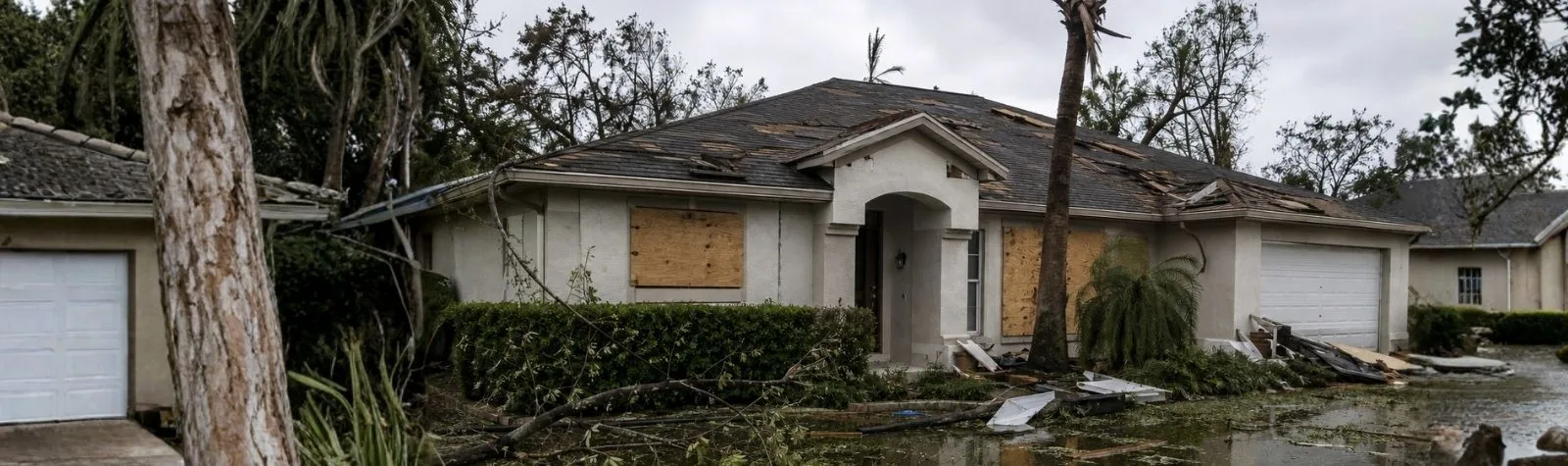
The short version: Your policy asks specific things of you after a storm: report the loss promptly, protect the property from further damage, document everything before you clean up, and keep your receipts. Florida law also sets deadlines for reporting hurricane damage, and missing them can cost you the claim.
Most homeowners have never read the part of their policy that explains what to do after a loss, but that part of the policy is your side of the agreement. It asks you to report the damage, keep it from getting worse, and be able to show what happened. If you do those things, a claim usually moves along. If you miss a step or wait too long, however, a loss that should have been covered can be denied.
What should I do first after a hurricane?
Before anything else, check on the people in your home. Stay away from downed power lines and standing water. Don’t go into a damaged structure until you know it’s stable.
Insurance can replace a roof. Take care of the people first.
What are my responsibilities after a hurricane?
Your policy spells these out, usually under a section called duties after loss. The wording varies, but the core responsibilities are consistent. In rough order:
- Photograph what you can, quickly. If it’s safe and it won’t cost you time, get phone photos before you touch anything.
- Stop the damage from getting worse. Tarp the roof, cover broken windows, get standing water out. If water is actively coming in, do this now and photograph as you go.
- Report the loss. Contact your insurer or agent as soon as you reasonably can. You don’t need a full damage list to make the call. If you have a policy with us, please call our emergency claims at 866-270-8430.
- Document thoroughly, before you clean up. Once the adrenaline settles, do a careful pass with photos and video, room by room.
- Keep damaged property if it’s safe to do so, until the adjuster has seen it.
- Save every receipt for temporary repairs, lodging, and other storm-related costs.
- Cooperate with the investigation. Answer questions, provide records, and be available for the inspection.
Steps two and three often happen at the same time, and that’s fine. The rule of thumb: emergency repairs shouldn’t wait, but cleanup should.
Who is responsible for what?
The obligations run both directions. Here’s a plain look at both sides:
|
You are responsible for |
Your insurer is responsible for |
|
|---|---|---|
| Reporting | Giving prompt notice of the loss | Acknowledging your claim within 7 days |
| Decision | Providing requested records and access | Paying or denying the claim within 60 days |
| Explanation | Documenting what was damaged | Explaining in writing why a claim was paid, reduced, or denied |
| Property | Preventing further damage after the storm | Inspecting and evaluating the damage |
| Your rights | Reviewing what you receive | Sending you the Homeowner Claims Bill of Rights |
Those insurer deadlines come from Florida law, not from goodwill. If your claim goes quiet, you have a right to ask about them.
Should I tarp the roof or take photos first?
Both, and the order depends on what the damage is doing.
If water is pouring in, cover it now. Letting a house soak for two days while you organize a photo album is the exact thing your policy asks you not to do. Take photos from the ground and contact your insurance carrier or a reputable roofing or tarping company to make temporary repairs.
If the damage isn’t getting worse, a downed fence, a dented garage door, a soaked couch, you have time. Document carefully first.
Take photos before discarding anything and include serial numbers and equipment manufacturer if available.
How should I document the damage?
Walk through every room with your phone and take wide shots and close shots. Get the exterior, the roof if you can see it safely, the fence, the shed. Photograph the water line on the walls. Open cabinets and closets and photograph what’s inside.
Then video the whole thing while narrating what you’re seeing. It takes ten minutes and it’s the single most valuable thing you can do for your claim.
If you have to throw something out for health reasons, photograph it first.
What does “prevent further damage” actually mean?
Most policies require you to take reasonable steps to stop the damage from getting worse. If a window breaks and rain keeps pouring in for two weeks, the damage from that rain may not be covered, because it was preventable.
Reasonable steps look like:
- Tarping a damaged roof
- Boarding or covering broken windows and doors
- Removing standing water
- Moving undamaged belongings somewhere dry
These are temporary fixes, and they’re your responsibility. Keep the receipts, because these costs are often reimbursable.
One important limit: temporary repairs are expected, but hold off on permanent repairs until your insurer has inspected the property. Replacing the whole roof before anyone has seen it makes your claim much harder to prove.
Do I have to pay for a hotel myself?
Not necessarily. If a covered loss makes your home unlivable – meaning you have no essential utilities, structural damage and health hazards, most policies include additional living expenses, sometimes called loss of use. It helps with the cost of somewhere to stay, meals above what you’d normally spend, and similar costs while your home is repaired.
This is another place where receipts matter. Keep them all, including gas, laundry, and restaurant meals. Ask your adjuster what qualifies under your policy.
How long do I have to file a hurricane claim in Florida?
This is the deadline that catches people, and it’s strict.
Under Florida law, you generally have one year from the date the hurricane made landfall to report a new or reopened claim. For a supplemental claim, meaning additional damage you discover later on the same loss, the window is 18 months from that date.
Two things to understand about this:
The clock starts at landfall, not on the day you noticed the damage. Hurricane damage often hides. A slow leak behind a wall can go unseen for months, and the calendar doesn’t wait.
Your policy may also require notice sooner than the law does. Policies typically ask for prompt notice, which is much shorter than a year. Follow the tighter of the two.
If you think you might have damage, report it. You can update the details later.
What should I watch out for after a storm?
Storm season brings out people looking to take advantage of homeowners who are stressed and in a hurry.
Be cautious with anyone who shows up uninvited offering repairs, especially if they want a large payment up front or push you to sign paperwork on the spot. Verify that a contractor is licensed and insured before any work begins. Get the scope and price in writing.
Be careful about signing anything you haven’t read, particularly documents that assign your insurance benefits to a third party. If someone pressures you to sign quickly, that’s your signal to slow down and call your agent first.
Frequently asked questions
How soon should I report hurricane damage? As soon as you reasonably can. Your policy asks for prompt notice, and reporting early starts your insurer’s response clock.
Should I clean up before the adjuster arrives? No. Cleanup can wait, and once debris is gone it’s hard to prove what was there. Emergency repairs are different: if damage is getting worse, tarp or board it right away and photograph the work. Hold off on permanent repairs, and if it’s safe, keep damaged items until they’ve been seen.
What if I find more damage later? Report it. Florida law allows supplemental claims for additional damage on the same loss, generally within 18 months of landfall.
Will my insurer pay for the tarp and boards? Often, yes. Reasonable temporary repairs to prevent further damage are typically reimbursable. Keep receipts and photograph the work.
What if my home is unlivable? Ask about additional living expenses coverage. It may help with lodging and certain extra costs while repairs are made. Save all receipts.
What if my claim goes quiet? Florida law requires your insurer to acknowledge your claim within 7 days and to pay or deny it within 60 days of notice, with limited exceptions. Follow up in writing and keep a record of your communications.
Are you ready before the next storm?
The homeowners who come through a claim most smoothly are the ones who prepared before the wind arrived. Photograph your home and belongings now, while everything is intact. Save a copy of your policy somewhere you can reach it without power. Know your deductible. Put your insurer’s claims number in your phone.
After a storm, your job is simple: stay safe, report it, protect the property, document everything, and keep your receipts. The rest is a process, and you don’t have to navigate it alone.
To report a claim with American Traditions, call the emergency claims line at 866-270-8430 or file online through the policyholder portal. If you have questions about your coverage before the next storm, find an agent near you.
About Jerger MGA
Jerger MGA is a managing general agency focused on Florida residential property insurance. As the exclusive MGA for American Traditions Insurance Company, we pair deep underwriting experience with careful risk assessment to help independent agents place coverage their clients can count on, including homeowners, condo, renters, dwelling fire, and manufactured home insurance. To find the right protection for your property, connect with a local independent agent in the Jerger network.
