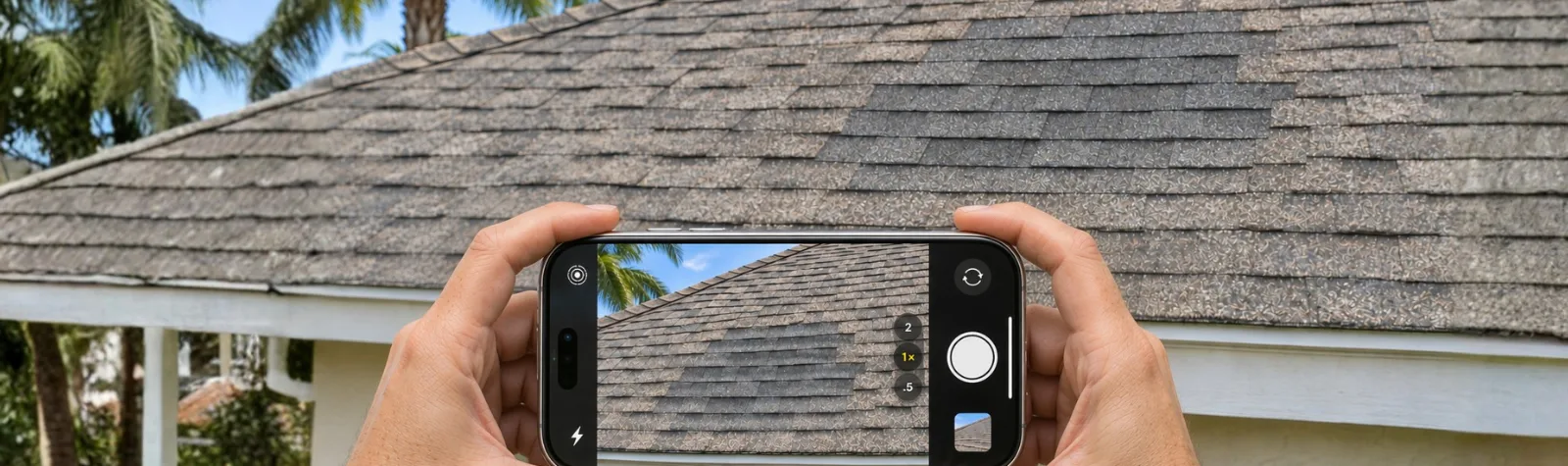
One roof can look perfectly serviceable from the street and still raise questions during underwriting. Another roof may be older than expected but have a documented maintenance history and no visible signs of deterioration.
For Florida insurance agents, roof age is often one of the first details collected when quoting a homeowners policy. It is an important piece of information, but it does not tell the entire story.
Roof condition, construction materials, replacement records and supporting documentation can all influence how an insurer evaluates a property, and understanding the distinction helps agents prepare more complete submissions and identify potential questions before they delay the process.
Why roof age and roof condition are not the same
Roof age generally refers to the number of years since the roof was installed or replaced. Roof condition describes its present physical state, including visible wear, deterioration, damage and signs of previous repairs.
These two factors are related, but they are not interchangeable.
A relatively new roof may have damage from a recent storm, installation problems or maintenance issues. An older roof may have been properly maintained and remain in serviceable condition.
Roofing material is also important. Asphalt shingles, metal, tile and other roofing systems have different performance characteristics and maintenance considerations. Their expected service lives can vary based on installation quality, environmental exposure and other factors.
Florida’s weather adds another layer to the evaluation. Wind, intense sunlight, heavy rainfall and prolonged humidity can affect roofing systems differently. Two homes with roofs installed in the same year may show substantially different levels of wear.
For underwriting purposes, neither age nor appearance should be treated as a complete assessment on its own. Insurers establish their own eligibility requirements, and a roof’s documented condition does not automatically override an age restriction.
What roof documentation tells an underwriter
A complete roof history helps an underwriter understand what is currently installed and whether the information supplied by the homeowner is supported by available records.
The documentation requested will depend on the carrier and the property, but several items can help clarify the risk.
| Documentation | What it helps establish |
|---|---|
| Roof installation or replacement date | The reported age of the roofing system |
| Building permit records | Whether documented roofing work occurred and its scope |
| Roofing material | The type of roof being evaluated |
| Roof inspection report | Observed condition and any identified deficiencies |
| Repair or maintenance records | Work performed and whether issues were addressed |
| Wind mitigation inspection | Documented wind-resistant construction features relevant to the inspection |
A wind mitigation inspection and a roof condition inspection serve different purposes. A wind mitigation report may document roof covering, roof-to-wall connections and other construction features that could affect available credits. It should not automatically be treated as proof that the entire roof is in satisfactory condition.
The date and scope of each document matter as much as its existence. An inspection completed several years ago may not reflect damage or repairs that occurred afterward.
Agents can avoid unnecessary follow-up by confirming that the documentation actually supports the information entered on the application.
When repairs or maintenance raise additional questions
One of the more common areas requiring clarification is the difference between roof repair and roof replacement.
A homeowner may describe a roof as updated because shingles were replaced after a storm or a contractor repaired a leaking section. Those improvements may be legitimate, but they do not necessarily establish a new installation date for the entire roof.
Consider a few examples:
- Partial shingle replacement: The work may address a specific area without changing the age of the remaining roof.
- Leak repair: The repair may correct an identified problem, but the cause and extent of any related damage still matter.
- Protective coating or maintenance: These treatments may be part of ongoing maintenance without constituting a complete roof replacement.
- Full roof replacement: Documentation should establish the scope of work, completion date and roofing material installed.
A contractor’s invoice can help establish what work was performed, provided the description is specific enough. An invoice showing general roof repairs should not be interpreted as proof of a full replacement.
The same distinction applies when a homeowner reports that a roof has been inspected and is in good condition. The inspection findings, inspection date and any recommended repairs provide the supporting detail.
If an inspection identifies deficiencies, the submission should accurately reflect whether those issues have been corrected and whether supporting documentation is available.
How roof replacement and permit records affect submissions
Roof replacement dates are sometimes reported from memory, particularly when a homeowner purchased the property after the work was completed.
A seller may have described the roof as new, or a real estate listing may have included an estimated age. That information can be useful as a starting point, but it may not establish the actual installation date.
Permit records, contractor documentation and available inspection reports can help resolve discrepancies.
A permit may identify roofing work, but its description should be reviewed before treating it as evidence of a complete replacement. The date a permit was issued may also differ from the date the project was completed.
For Florida properties, roof-related underwriting considerations may involve both carrier guidelines and applicable state requirements. Florida law includes provisions concerning roof age, inspections and certain insurer eligibility decisions. Those provisions have specific conditions and should not be interpreted as a universal guarantee of coverage for an older roof.
Agents should evaluate the applicable carrier requirements and current law rather than assuming that a roof’s age or a favorable inspection alone determines eligibility.
What to clarify before submitting a risk
The most useful roof information is specific, consistent and supported by the available records.
Before submitting a property for consideration, several details are worth confirming:
- What is the roof’s documented installation or replacement date? If the date is estimated, identify the source of that estimate.
- What roofing material is installed? Confirm whether the reported material applies to the entire structure.
- Has the roof been repaired or partially replaced? Establish the scope and date of the work.
- Are there known leaks, damage or outstanding repair recommendations? Determine whether the available documentation reflects the current condition.
- Do inspection reports, permits and application details agree? Resolve discrepancies where possible before submission.
These questions do not replace the insurer’s underwriting requirements. They help establish a clearer account of the property so that the risk can be evaluated using the correct information.
They can also improve conversations with homeowners. A client may reasonably believe that a roof is in good condition because it has not leaked. The agent’s responsibility is to document the property accurately, not to make an independent determination of its insurability.
Better information supports a more efficient underwriting review
Roof age will continue to be an important underwriting consideration in Florida. Roof condition, replacement history and supporting records provide context that a single installation date cannot.
For independent agents, a well-documented submission can reduce avoidable questions and make it easier to identify whether a property fits a particular program.
Working with Jerger MGA? Contact our team with questions about submission requirements or available placement options.
Interested in working with Jerger? Visit our website to learn more about becoming an appointed agent and accessing our available programs.
About Jerger MGA
Jerger MGA is a Florida-based managing general agency serving independent insurance agents. Our team brings specialized knowledge of Florida property insurance and experience working with agents to identify placement opportunities, understand program requirements and prepare submissions for underwriting consideration. We value responsive service, established relationships and the practical expertise agents need when working in a changing insurance market.
